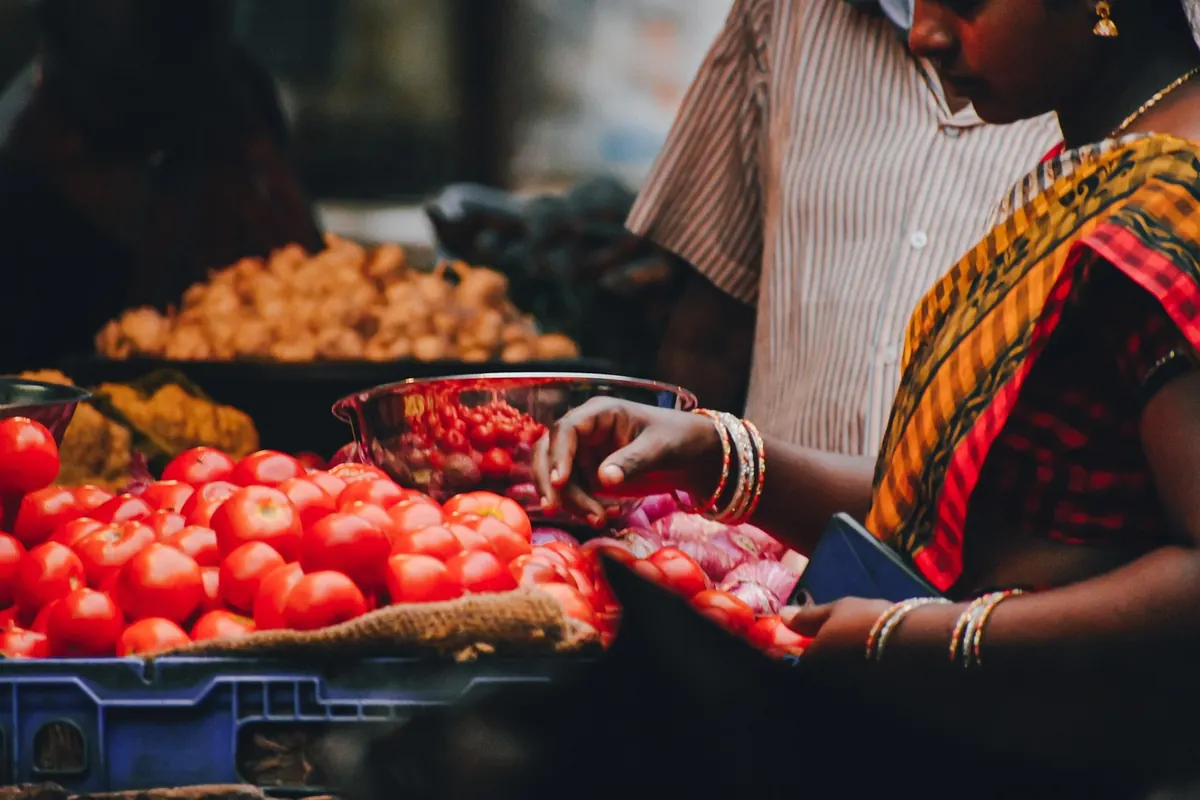
Farmers Market vs. Priory Grocery Stores: Where to Find the Best Seasonal Produce
Every Saturday the square fills with crates of whatever the week actually grew, and by Sunday afternoon it's gone. The rest of the week, the Priory's grocery stores are open, lit and stocked with tomatoes that look the same in January as they do in August. Both are useful. Neither is automatically better. The honest question isn't which one wins — it's which one is right for the meal you're about to cook.
What the Saturday Market Does Best
Market produce is usually picked within a day or two of sale, and for soft fruit and leafy greens it can be hours. That gap matters most for things with a short shelf life: berries, salad leaves, herbs, sweet corn, peas, peaches, asparagus. Growers pick those at ripeness rather than at the stage that survives a warehouse, a truck and three days on a shelf.
You can also ask questions and get real answers. “When was this picked?” is a normal thing to say at a stall. So is “will these be ready tomorrow or do they need two days on the counter?” That conversation is worth more than any label, and it's the single biggest advantage the market has.
Where the Grocery Stores Win
Stores win on hours, and hours are not a small thing. If you finish work at eight on a Tuesday and you need dinner, the market is a memory. The shops are open, the lights are on, and someone has already dealt with the cold chain so that the milk and the chicken are at a safe temperature when you get there.
They also carry the things a market may not: bananas, citrus in deep winter, frozen peas, tinned tomatoes, the specific brand of yoghurt your household insists on. And their buying standards make produce predictable — the apples are all roughly the same size, the avocados are all at the same stage. If you're cooking for twelve people on Sunday, predictable is a virtue.
Price: It Depends on the Week, Not the Venue
There's no simple rule here, and anyone who tells you the market is always cheaper has not shopped in February.
In peak season, when the region is drowning in courgettes or tomatoes, market stalls often match or beat shop prices for that specific item, because there's no distribution chain between the grower and you. Buy a flat of tomatoes or a sack of peppers and the per-unit cost drops further — but only if you actually have a plan for them. Sauce, chutney, a freezer bag. Otherwise you've bought a bargain and thrown half of it away, which is the most expensive way to shop.
Out of season, and for anything that has to be shipped in, the shops are usually cheaper. They buy in volume, they negotiate, and they can absorb a bad week. They also run their own cycles: weekly specials, markdowns on fruit that's ripe now, loyalty pricing on the things you buy every week.
Two habits help more than any rule. At the market, go late in the day if you want deals — sellers would rather move stock than pack it, though the best of it will be gone. At the shop, check the reduced shelf for ripe fruit you'll use in the next day or two, and don't assume the special is a saving if it's not something you'd have bought anyway.
Freshness Isn't One Thing
Fresh from the field and fresh in the sense of “will keep until Thursday” are different qualities, and confusing them costs money.
Root vegetables, squash, apples, onions and potatoes store for weeks. A well-run shop can sell you carrots that are every bit as good as the ones on a stall, sometimes better handled. Delicate produce is the opposite: salad leaves, soft herbs, berries and stone fruit start losing condition the moment they're picked, and that's where the market's shorter journey shows up on the plate.
There's also a catch worth knowing. Market produce picked at full ripeness is often ready to eat now and gone in three days. Buy it for the week ahead, not the fortnight ahead, unless you're buying storage crops.
Variety: Heirloom Versus Predictable
At the market you'll find varieties that never make it into a supermarket: odd-shaped tomatoes with actual flavour, unfamiliar greens, three kinds of new potato, a grower who only does bitter leaves. If you like cooking and you like surprises, that's the appeal.
The shops offer breadth instead — a consistent range across twelve months, plus everything that isn't produce. Neither replaces the other. Wanting one specific ingredient at nine at night is a shop problem, not a market problem.
The Logistics Nobody Mentions
Convenience is about more than distance. The market is a single window on a single morning, often cash-only, usually outdoors, and you'll want your own bags. Rain, a late start or a full car park can wipe out the trip entirely.
The shop is open when you need it, takes a card, has a trolley and a roof, and gets everything on the list into one bag. If your week is tight, that's not laziness — it's the correct call.
A Practical Split
Most households end up with a hybrid rhythm rather than a loyalty. A workable starting point:
- Buy at the market: berries, salad greens, herbs, sweet corn, peas, tomatoes at peak, peaches and other stone fruit, anything you'll eat within three days, and bulk quantities you intend to preserve or freeze.
- Buy at the shop: bananas, citrus, out-of-season imports, frozen and tinned goods, dairy, meat and pantry staples — plus anything you need on a Monday.
- Compare case by case: apples, potatoes, onions, carrots and squash. These store well, so buy whichever looks better that week.
A few market habits worth building:
- Go early for choice, late for discounts. Decide which you want more.
- Bring cash in small notes and your own bags.
- Ask what was picked when, and how long it will keep.
- Buy in bulk only with a plan for using it.
- Don't feel obliged to buy from every stall. Walk the whole market once before you spend.
Making It Work Week to Week
Use the market for the things that reward being picked recently and eaten soon, and for the pleasure of talking to someone who grew your dinner. Use the shops for everything else, including the Tuesday-night rescue mission. Treat the two as a pair rather than rivals, and buy the better item rather than the more romantic one. That's how you end up eating well without turning a food shop into a weekly referendum.
Photo: udayteja7770 / Pixabay


You Might Also Like
A practical walkthrough of Priory town hall meetings: how the evening unfolds, how to sign up for public comment, what to say at the microphone, and how to follow up.
Priory's buses stop running before most late shifts end. Extending service would make the walk home safer, keep workers employed and give downtown a real night.